
The short answer
Golden Gai is a cluster of six narrow alleys in Shinjuku holding over 200 bars, most seating fewer than ten people. First-timers are welcome at many of them — look for English signs or posted prices, expect a ¥700–¥2,000 cover charge (think of it as a table charge) at most counters, don’t photograph people without asking, and treat every bar like someone’s living room. Pick the door whose vibe matches yours, and you’ll have one of Tokyo’s most memorable nights.
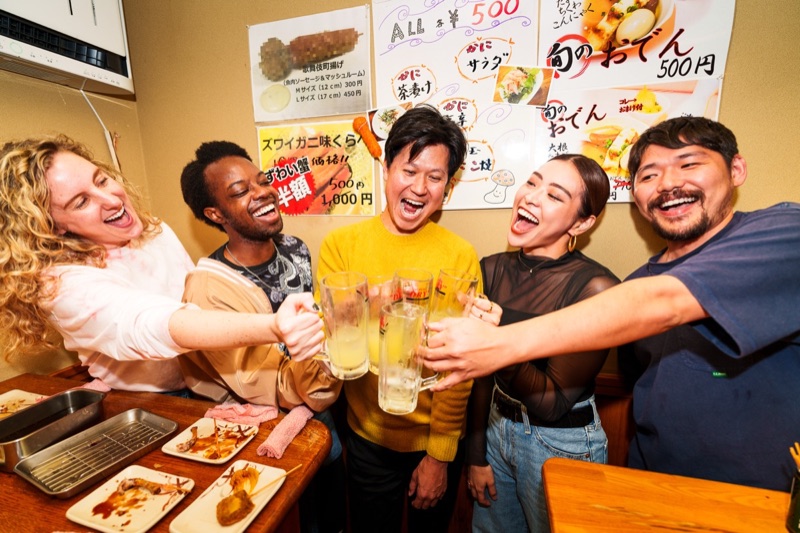
Want to do this with a local? Shinjuku Food & Drink Night Tour — From $130 (~¥20,500), small group, led by our own guides.
Why Golden Gai exists
Golden Gai is a surviving patch of post-war Tokyo: two-story wooden buildings shoulder-to-shoulder, each floor barely wider than its bar counter. While the rest of Shinjuku was rebuilt into towers, these six alleys held on — and became a haunt for writers, filmmakers, musicians, and the bartenders who collect them. Each of the 200+ bars has its own theme, its own regulars, and its own unwritten rules.
That last part is what makes first-timers nervous, and it’s fair: some bars really are regulars-only, and walking into the wrong one feels like crashing a stranger’s dinner party. But plenty of others genuinely welcome travelers — the trick is telling them apart.
How to pick a bar (and read the signs)
Posted English menus or prices outside the door are the clearest welcome sign. “No charge” or a stated cover (typically ¥700–¥2,000) means tourists are expected; the cover works like a table charge — it pays for your seat in a bar that only has eight of them. It’s rent, not a scam. A door with no prices, no sign, and a curtain drawn tight is usually a regulars’ place; respect it and move on.
Once inside: order at least one drink per person, keep your group small (three is ideal, five is a squeeze), and talk to the bartender — that’s the entire point of a Golden Gai bar. Many “masters” and “mamas” have run their counters for decades and are the best storytellers in Shinjuku.
The etiquette that matters
No photos of people or bar interiors without asking — several alleys have signs banning street photography too, because flashes through doorways got out of hand. Don’t bar-crawl with open drinks in the alley, don’t smoke outside designated spots, and keep voices down after midnight; people live upstairs.
If a bar is full (most hold 6–10 people), the bartender will wave you off — it’s capacity, not rejection. Try the next door. Going with a local who already knows which master welcomes newcomers turns the whole maze into a homecoming; that’s the finale of our evening food tour for a reason.
Is Golden Gai a Tourist Trap?
No — and that's the short answer to one of the most common questions about Shinjuku nightlife. Golden Gai is a genuine neighbourhood of 200+ bars built for conversation, not for Instagram. Some spots lean tourist-friendly, others are unchanged in 40 years, but all of them are real. Knowing how to pick the right door is the only skill you need — and that's exactly what this guide teaches.
Frequently asked questions
How much does a night in Golden Gai cost?
Budget roughly ¥2,500–¥4,500 per bar: a ¥700–¥2,000 cover (a table charge, essentially) plus drinks at ¥900–¥1,300 each. Two or three bars makes a full night. Cash is still king at many counters — bring yen.
Can I visit Golden Gai without speaking Japanese?
Yes — pick bars with English signage and you’ll be fine; many bartenders enjoy practicing their English. A smile, a pointed finger at the menu, and “sumimasen” cover 90% of situations.
What time should I go?
Most bars open between 19:00 and 21:00 and run past midnight. Around 21:00–22:00 has the best energy: bars are alive but not yet packed. Note that many bars close on Sundays.
Is Golden Gai a tourist trap now?
Some bars cater mostly to visitors, others haven’t changed in 40 years — both are real Golden Gai. Avoiding the flat, generic spots is mainly about picking the right door, which is exactly where local knowledge (or a local guide) earns its keep.
More local guides
- Is Kabukicho Safe at Night? (And Is It Dangerous?) — A Local's Honest Answer →
- Is Tsukiji Still Worth Visiting? What Actually Moved to Toyosu →
- Omoide Yokocho vs Golden Gai: Which Should You Visit? →
- Tokyo Izakaya Etiquette: The Rules First-Timers Actually Need →
- Are Tokyo Food Tours Worth It? An Honest Answer from Guides →
- Visiting Meiji Shrine: Etiquette, Best Time & What to Expect | Tokyo Local Guide →
- What Is an Izakaya? How It Differs from a Bar or Restaurant →
- Is Tokyo Nightlife Fun as a Solo Traveler? (Yes — Here's Why It Works) →
- What Is Nomihodai? Japanese Drinking Culture Rules Explained →
- What to Eat at Tsukiji Outer Market: A Must-Try List →
- Shimokitazawa, Koenji & Nakano: Where Young Tokyo Actually Hangs Out →
- What Can You Do on a Private Tokyo Tour? Real Examples & How It Works →
- Do You Tip in Tokyo? Restaurants, Taxis, Guides & Hotels Explained →
- How to Find Local Experiences in Tokyo (Without the Tourist Traps) →
- One Perfect Night in Shinjuku: What to Do from 5pm to Midnight →