
The short answer
At Tsukiji Outer Market, the must-tries are grilled seafood skewers, fresh sushi or sashimi, tamagoyaki (sweet rolled egg omelet), onigiri, and matcha-based sweets. These cover the market's greatest hits and suit most dietary needs across the 400-plus stalls still trading in the outer market. Budget around ¥5,000 per person in cash for a satisfying morning of grazing — more if you want to go deeper into sushi or premium seafood. The market is at its most crowded from around 09:00 to 12:00, and many stalls sell out by early afternoon — so arriving around 08:00, when many of the best shops open, makes a real difference to both what you'll find and how long you'll queue.
The must-try foods, one by one
Tamagoyaki is the dish most associated with Tsukiji, and for good reason. Several stalls specialize in the sweet, layered rolled omelet — some have been making it the same way for decades. Most sell small rectangular pieces you can eat on the spot, and a few will hand you a hot sample while you decide. It is one of the more vegetarian-friendly options in the market, alongside pickles, fresh fruit, and matcha sweets.
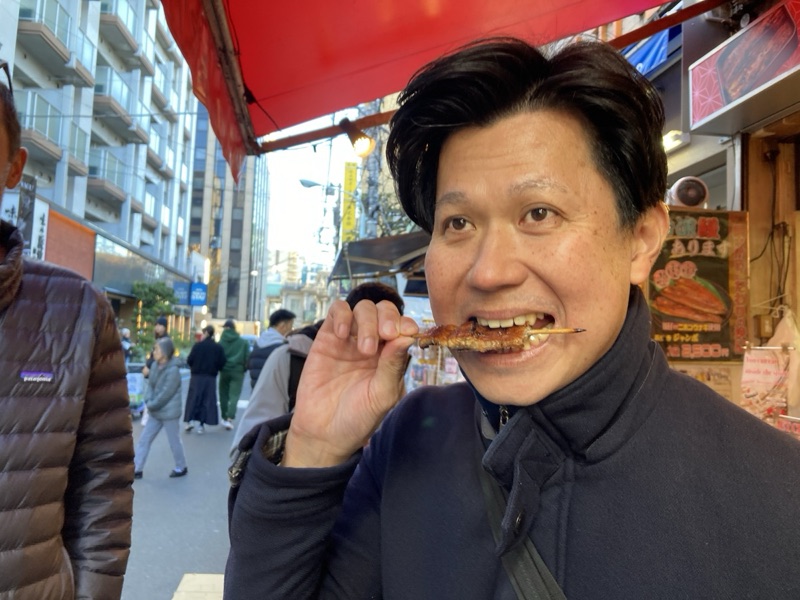
Grilled seafood is everywhere: scallops in the shell, jumbo shrimp, whole squid, and seasonal catches cooked over charcoal right at the counter. These skewers make for easy street eating and the smell alone will point you in the right direction. Sushi and sashimi are also on offer at sit-down counters tucked into the market lanes — small menus, low prices relative to a restaurant, and fish bought the same morning. If raw fish at 09:00 sounds right to you, Tsukiji is one of the best places in Tokyo to do it.
On the sweeter side, matcha soft-serve, matcha chocolates, and other green-tea confections appear at multiple stalls and make good gifts as well as snacks. Onigiri — rice balls with various fillings — are another solid option if you want something more substantial without committing to a full sushi counter. The market also has seasonal fruit stalls that are worth a stop, especially in summer. And Tsukiji goes well beyond seafood and sweets: tucked among the stalls you'll find excellent fresh-baked bread, a famous coffee shop, traditional Japanese sweets, sake shops worth browsing for a bottle to take home, and some of Tokyo's best-regarded Japanese knife stores.
Cash, timing, and the queue question
Bring around ¥5,000 per person in cash, in coins and small bills where possible. Most stalls at Tsukiji do not accept cards, and having exact change speeds things up at busy counters. Individual tastings typically run in the ¥300–¥1,500 range depending on what you order, so ¥5,000 leaves room for several stops without feeling rushed. Premium ingredients are a different story — crab, wagyu, and other luxury items can run ¥3,000–¥5,000 per serving, and sometimes more. If you plan to splurge on those, sit down at a sushi counter, or buy knives or kitchenware to take home, bring more.
Timing matters more here than at most Tokyo attractions. The market is at its most crowded from around 09:00 to 12:00 — that is when the tour groups and day-trippers pour in and the main lanes slow to a shuffle. This is exactly why our own tour starts at 08:00: you stay ahead of the peak crowds, and many of the shops we recommend open at 08:00, so you get first pick while everything is freshly stocked. By early afternoon, popular items sell out and some counters close entirely. If you see a stall with a short queue and good-looking product, that is usually the signal to stop rather than keep walking. Our article on whether Tsukiji is still worth visiting covers the broader context of the 2018 Toyosu move for anyone who wants the backstory.
The queues that look longest are not always the ones worth joining. Some very good stalls have no queue at all because they sit one lane off the main path. This is exactly the judgment call that makes a guided visit different from wandering on your own — our Tsukiji Market Food Tour is built around two hours of guided grazing with a local who knows which counters to head for and can help you order at stalls with no English menu. Yoshi, the founder of Japan Local Experience and the creator of this tour, lived right next to Tsukiji for about three years, and the spots the tour recommends come straight from that everyday local experience. Groups are capped at six people, so you are never trying to navigate a crowded stall with a crowd of your own.
What to know before you go
Pescatarians eat very well at Tsukiji. Vegetarians can also have a good morning — tamagoyaki, matcha sweets, pickles, fresh fruit, and grilled mochi are all options — though the selection is naturally smaller than for fish-eaters. If you have specific dietary needs, it is worth thinking through your route in advance or flagging it when booking a guided tour so your guide can plan the stops accordingly.
Wear comfortable shoes and dress for the weather. The outer market is partly covered but not fully enclosed, so summer mornings can be warm and rainy-season visits are genuinely wet. A small bag or tote is useful for any market purchases — the market's kitchenware and knife shops are excellent and many travelers leave with more than they planned to buy.
One practical note: eating while walking is fairly common and accepted at Tsukiji, unlike in some other parts of Japan where it is considered impolite. Most stalls hand you food on a stick, in a cup, or wrapped so you can keep moving. If you do sit at a counter, take your time — it is one of the few places in Tokyo where a slow breakfast at a fish counter feels entirely natural.
Frequently asked questions
How much cash should I bring to Tsukiji Outer Market?
Around ¥5,000 per person covers a solid morning of grazing across multiple stalls. Individual items generally run in the ¥300–¥1,500 range, though premium ingredients like crab or wagyu can cost ¥3,000–¥5,000 or more per serving. Most stalls are cash-only, so bring coins and small bills if you can. Add more if you plan to try the premium items, sit at a sushi counter, or shop for knives and kitchenware.
Is tamagoyaki really worth trying at Tsukiji?
Yes — it is one of the dishes most closely associated with the market, and several stalls have been making it for generations. You will often be offered a sample before buying. It is also one of the better options for visitors who do not eat fish.
Can vegetarians find things to eat at Tsukiji?
Yes, though the selection is smaller than for fish-eaters. Tamagoyaki, matcha sweets, pickles, fresh fruit, grilled mochi, and onigiri (check the filling) are all possibilities. Tell your guide in advance if you are joining a tour and they will plan the stops around what is available.
What time should I arrive at Tsukiji Outer Market?
Arrive around 08:00 if you can. The market is at its most crowded from 09:00 to 12:00, so an early start means shorter queues — and many of the best shops open at 08:00, which is why our own tour starts then. Popular items at the best stalls sell out before early afternoon, and some counters close entirely once their stock is gone.
More local guides
- Is Kabukicho Safe at Night? A Local’s Honest Answer →
- Golden Gai for First-Timers: Etiquette, Cover Charges & How to Pick a Bar →
- Is Tsukiji Still Worth Visiting? What Actually Moved to Toyosu →
- Omoide Yokocho vs Golden Gai: Which Should You Visit? →
- Tokyo Izakaya Etiquette: The Rules First-Timers Actually Need →
- Are Tokyo Food Tours Worth It? An Honest Answer from Guides →
- Visiting Meiji Shrine: Best Time, Etiquette & What Not to Do →
- What Is an Izakaya? How It Differs from a Bar or Restaurant →
- Is Tokyo Nightlife Fun as a Solo Traveler? (Yes — Here's Why It Works) →
- What Is Nomihodai? Japanese Drinking Culture Rules Explained →