
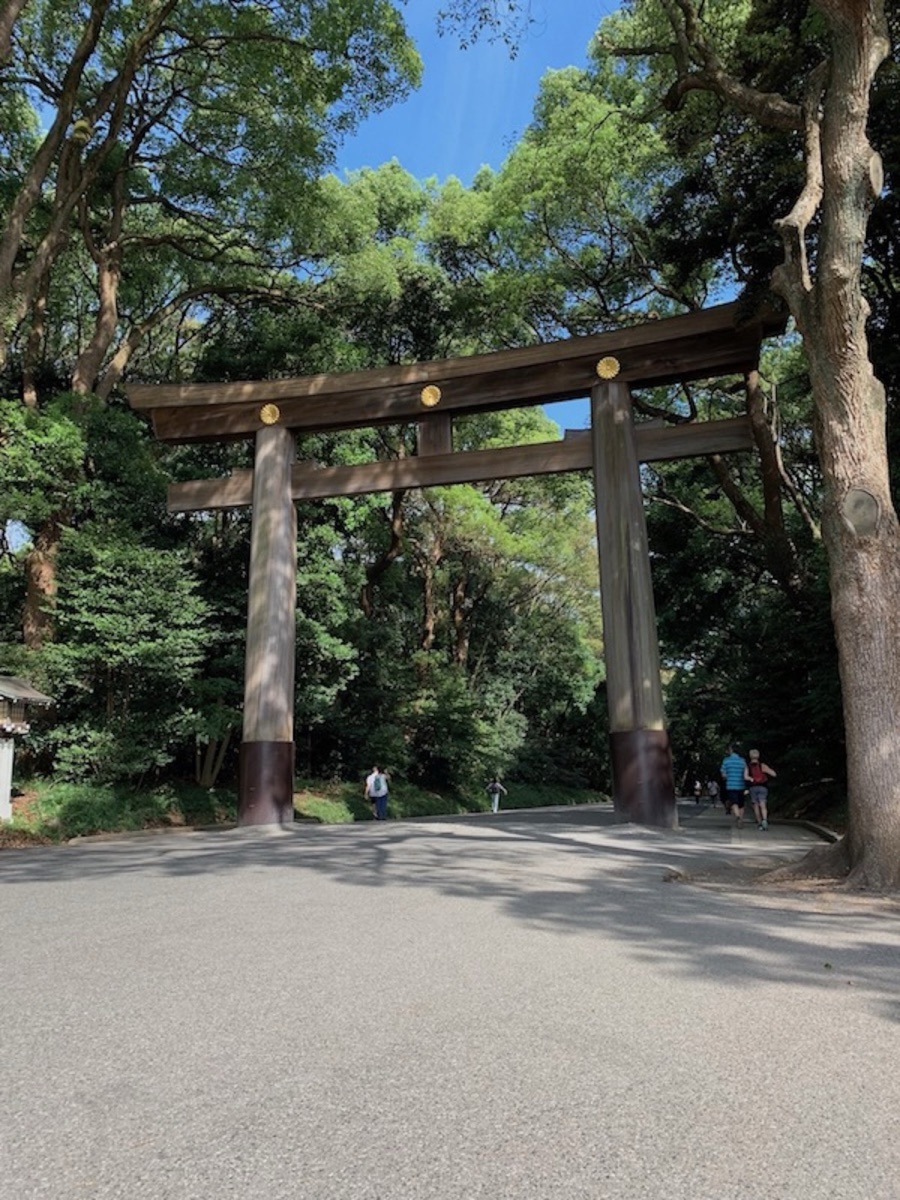
The short answer
Go early: Meiji Shrine opens at sunrise (roughly 5:00–6:40 a.m. depending on the month), and the first two hours are when the 100,000-tree forest is at its quietest. Entry is free. The etiquette essentials fit in a minute: bow once before passing under the torii gate, walk to either side of the path (the center is reserved for the deity), purify your hands at the water basin, and pray with two bows, two claps, one bow. Dress is casual-fine — respect here is about behavior, not clothing.
Why mornings change everything
Meiji Shrine sits inside a forest of roughly 100,000 trees, planted a century ago and designed to feel ancient. At 8 a.m. on a weekday, the gravel path is mostly yours: you hear your own footsteps, the crows, and not much else — a genuinely startling silence given that Harajuku’s crowds are five minutes away. By late morning, especially on weekends, the same path carries a steady stream of visitors and the spell weakens.
Two more reasons to go early: the light through the trees is at its best, and you’ll often catch the shrine’s daily rhythms — groundskeepers sweeping the gravel in patterns, and occasionally a traditional wedding procession crossing the courtyard mid-morning (watch quietly, and don’t block their path for a photo).
The etiquette, step by step
At the torii gate: pause and bow once before walking through — it’s the boundary between the ordinary world and the shrine. On the path, keep to either side; the center line is traditionally the kami’s (deity’s) walkway. It’s a rule most tourists don’t know, which makes following it a quiet way to show you did your homework.
At the temizuya (water pavilion): take the ladle in your right hand and rinse your left hand, switch hands and rinse your right, then pour water into your cupped left palm to rinse your mouth (never drink from the ladle), and finally tip the ladle upright so the remaining water runs down the handle. It’s simpler than it reads — thirty seconds, start to finish.
At the main hall: toss a coin into the offering box (any coin is fine — the amount carries no meaning to the deity), bow twice, clap twice, hold your wish or gratitude in silence, then bow once more. Photography is fine in the courtyards but prohibited inside the main hall where signs indicate — follow the signs and you can’t go wrong.
What not to do (the short list)
Don’t eat or drink while walking the grounds, don’t smoke outside designated areas, and keep phone calls for after — the forest’s quiet is the attraction, and everyone is sharing it. The giant sake and wine barrel walls near the entrance are the most photographed spot on the path; photos are welcome, climbing and touching are not.
One honest note on scope: the shrine grounds are free, while the Inner Garden (home to Kiyomasa’s Well and June irises) charges a small maintenance fee. If your time is short, the main approach and hall deliver the essential experience — the garden is a bonus for a slow morning, not a requirement.
Frequently asked questions
What time does Meiji Shrine open and is it free?
The shrine opens at sunrise and closes around sunset, so hours shift with the seasons (opening runs roughly 5:00–6:40 a.m. through the year). The grounds and main hall are free; only the Inner Garden charges a small entry fee.
How long do you need at Meiji Shrine?
About 60–90 minutes covers the forest approach, the temizuya ritual, the main hall, and the sake barrels at an unhurried pace. Add 30–40 minutes if you include the Inner Garden.
Is there a dress code at Meiji Shrine?
No formal dress code — normal casual clothing is completely fine. Respect at a Shinto shrine is expressed through behavior (the bow at the torii, quiet voices, following photo signs), not through what you wear.
Meiji Shrine or Senso-ji — which should I visit?
Different experiences: Senso-ji in Asakusa is a Buddhist temple that’s vivid, commercial, and gloriously busy; Meiji Shrine is a Shinto forest that’s quiet and meditative. If your trip allows, do both — but if you want calm, Meiji Shrine at opening hour is unbeatable.
More local guides
- Is Kabukicho Safe at Night? A Local’s Honest Answer →
- Golden Gai for First-Timers: Etiquette, Cover Charges & How to Pick a Bar →
- Is Tsukiji Still Worth Visiting? What Actually Moved to Toyosu →
- Omoide Yokocho vs Golden Gai: Which Should You Visit? →
- Tokyo Izakaya Etiquette: The Rules First-Timers Actually Need →
- Are Tokyo Food Tours Worth It? An Honest Answer from Guides →
- What Is an Izakaya? How It Differs from a Bar or Restaurant →
- Is Tokyo Nightlife Fun as a Solo Traveler? (Yes — Here's Why It Works) →
- What Is Nomihodai? Japanese Drinking Culture Rules Explained →
- What to Eat at Tsukiji Outer Market: A Must-Try List →
- Shimokitazawa, Koenji & Nakano: Where Young Tokyo Actually Hangs Out →
- What Can You Do on a Private Tokyo Tour? Real Examples & How It Works →
- Do You Tip in Tokyo? Restaurants, Taxis, Guides & Hotels Explained →