The short answer
Honest answer from people who run them: not always. If you have weeks in Tokyo, love researching restaurants, and feel comfortable walking into a place with no English menu, you don’t need a food tour. Where a tour earns its price is the opposite situation: your first night or two, the izakaya alleys where the best counters have eight seats and no signage in English, dietary restrictions, or traveling solo and wanting company. One good guided night early in the trip also teaches you how to eat everywhere else on your own.
When you should skip the tour
Let’s start with the case against us. If you’re in Tokyo for two weeks or more, enjoy restaurant research, and get a small thrill from pointing at a stranger’s dish and ordering “that one” — explore alone. Tokyo is arguably the world’s safest big city for culinary trial and error: even a random pick is rarely bad, convenience-store food is famously decent, and a ¥1,000 bowl of ramen chosen by queue-length alone will often be excellent.
A tour is also the wrong purchase if what you actually want is a cheap night out. A guided evening costs more than the same food ordered yourself — you’re paying for judgment, access, and translation, not markup-free calories. If budget is the constraint, spend it on one great sushi counter instead.
When a tour is genuinely worth it
The math changes in specific situations. First: the start of your trip. One guided evening on night one or two front-loads everything — how ordering works, what things should cost, which neighborhoods reward wandering — and the recommendations your guide gives you tend to shape the rest of the trip. Guests tell us this constantly: the tour paid for itself in what they did with the next five days.
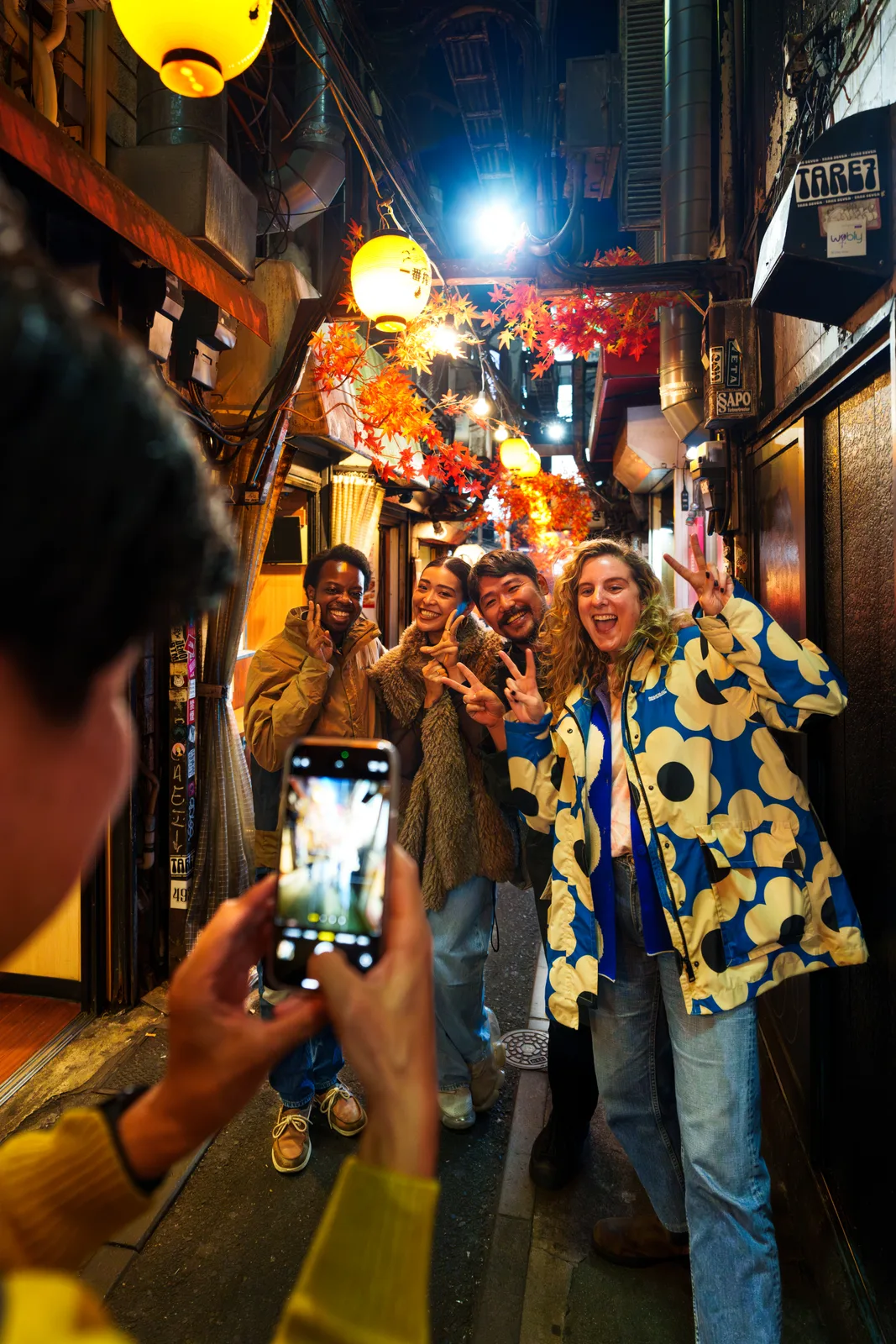
Second: the places you actually came for. Shinjuku alone has more than 3,000 restaurants and bars, and the memorable ones — the eight-seat izakaya with no English menu, the standing bar where office workers eat kushiage on a Friday — are precisely the ones that are hardest to walk into cold. A local turns those doors from intimidating into ordinary.
Third: circumstances that raise the stakes of guessing. Vegetarian, halal, allergies, or traveling with someone picky — a guide who has pre-arranged every stop removes the nightly negotiation. And if you’re solo, a small-group food tour is the single easiest way to spend an evening with other travelers; roughly a third of our own guests join alone.
And the simplest reason has nothing to do with logistics: you want a local to walk you through the places they genuinely love, to eat something delicious or strange you would never have found on your own, and to spend an evening asking a Tokyo local all the questions about Japan that guidebooks never answer. That curiosity is what guiding exists for — and, guests tell us, the part they remember longest.
How to pick a good one (including not ours)
Whatever company you choose, apply the same three filters. Group size: past ten people, a food tour becomes a walking queue — look for a stated cap. Inclusions: “food included” can mean two tastings or a full dinner, so check whether drinks are covered and whether you’ll leave full. And guides: are they locals who actually eat in these places, or staff working a script? Reviews that name individual guides are the reliable signal.
Price-wise, Tokyo group food tours run roughly $30 for a short daytime walk to $130+ for a full evening with food and drinks included. Compare what’s included rather than the sticker: an “inexpensive” tour where you pay for every dish and drink often ends up costing more than an all-inclusive one.
Frequently asked questions
How much does a food tour in Tokyo cost?
Typical group tours run $30–$130+ per person depending on length and inclusions. The honest comparison is what’s included: a 3-hour evening tour with all food and drinks covered (like ours at $130) usually beats a cheaper tour where every dish is extra.
Are food tours good for solo travelers?
They’re one of the best evenings a solo traveler can book: a ready-made small group at exactly the meal (dinner) that feels loneliest alone. About a third of our guests join solo, and the 10-person cap means nobody stays a stranger for long.
Should I do a food tour at the start or end of my trip?
Start — ideally night one or two. You’ll use everything you learn (how to order, what to pay, where to go back to) for the rest of the trip. On the last night it’s just a nice dinner; on the first night it’s training.
Do I need to tip my tour guide in Japan?
Tipping isn’t part of Japanese culture, so it’s never expected — but offering one isn’t rude, just unfamiliar. A guide will usually be delighted, though custom means they may politely decline at first; a warm insistence settles it. And if you want the thank-you that matters most to a small local operator, write a review.
More local guides
- Is Kabukicho Safe at Night? A Local’s Honest Answer →
- Golden Gai for First-Timers: Etiquette, Cover Charges & How to Pick a Bar →
- Is Tsukiji Still Worth Visiting? What Actually Moved to Toyosu →
- Omoide Yokocho vs Golden Gai: Which Should You Visit? →
- Tokyo Izakaya Etiquette: The Rules First-Timers Actually Need →
- Visiting Meiji Shrine: Best Time, Etiquette & What Not to Do →
- What Is an Izakaya? How It Differs from a Bar or Restaurant →
- Is Tokyo Nightlife Fun as a Solo Traveler? (Yes — Here's Why It Works) →
- What Is Nomihodai? Japanese Drinking Culture Rules Explained →
- What to Eat at Tsukiji Outer Market: A Must-Try List →
- Shimokitazawa, Koenji & Nakano: Where Young Tokyo Actually Hangs Out →
- What Can You Do on a Private Tokyo Tour? Real Examples & How It Works →
- Do You Tip in Tokyo? Restaurants, Taxis, Guides & Hotels Explained →