
The short answer
Shrines are Shinto places of worship, marked by a torii gate at the entrance, while temples are Buddhist, typically announced by a large gate called a sanmon or niomon. The two religions have coexisted in Japan for over a thousand years, so you will often find both within walking distance of each other — and occasionally on the same grounds. The etiquette differs too: at a shrine you clap twice after bowing; at a temple you press your hands together in silence. Spotting these details turns a sightseeing walk into something that actually makes sense.
Want to do this with a local? Meiji Shrine Morning Walk & Brunch — From $35 (~¥5,500), small group, led by our own guides.
How to tell them apart before you even walk in
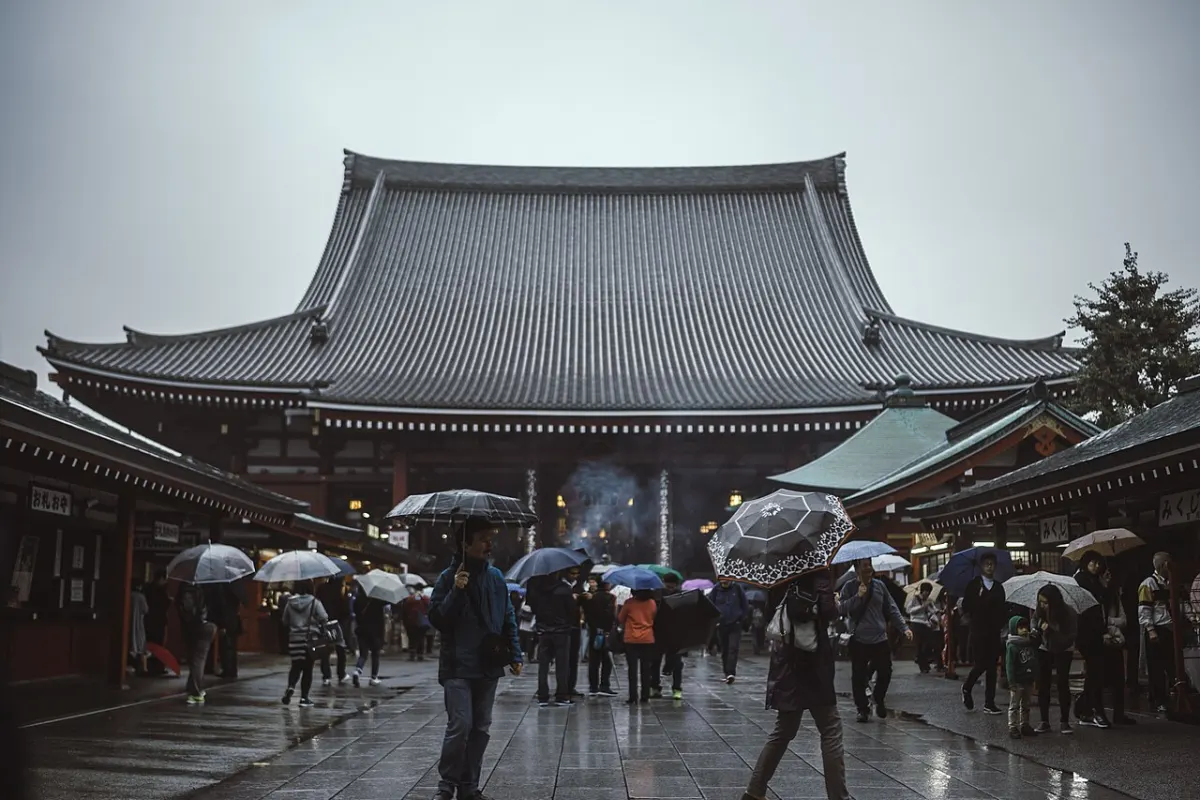
The single most reliable sign is the gate. Shrines have a torii — that iconic two-post, two-crossbeam gate, usually orange-red or unpainted wood — marking the boundary between the everyday world and sacred space. Temples have a roofed structural gate, often called a sanmon or niomon, which is a full building you walk through rather than simply under. If there's a large wooden gate with guardian statues (the fierce-looking nio figures) on either side, you're at a temple.
The name endings are a useful second check, though not a perfect rule. Shrine names typically end in -jinja, -jingu, or -taisha (Meiji Jingu, Yasukuni Jinja, Fushimi Inari Taisha). Temple names usually end in -ji, -tera, or -in (Senso-ji, Kinkaku-ji, Ryoan-ji). A few famous sites blur the line because both a shrine and a temple share the same hillside — Nikko is the classic example — so the gate and the name together are your best guide.
One more visual clue: look for the hand-washing basin. Shrines have a chouzuya, a stone basin fed by running water where you purify your hands before approaching the main hall. Temples often have an incense burner (koro) at the front instead — you're expected to waft the smoke over yourself for purification. Both practices serve the same ritual purpose, but through different traditions.
Shinto, Buddhism, and why Japan has both
Shinto is Japan's indigenous religion, focused on kami — spirits or divine forces that inhabit natural features, ancestors, and places. There is no founder, no single sacred text, and no explicit moral code in the way many Western religions have. Shrines exist to house and honor kami, and visiting one is as much about gratitude and connection as it is about formal worship.
Buddhism arrived from the Asian continent (via Korea and China) roughly in the 6th century CE and gradually wove itself into Japanese culture alongside Shinto rather than replacing it. For most of Japanese history the two existed in a state of productive overlap — temples and shrines sharing precincts, Buddhist monks tending Shinto kami, and ordinary people drawing on both without contradiction. A government decree in 1868 officially separated them, which is why they are now distinct institutions, but the cultural memory of their overlap is everywhere.
In practical terms, this means Japanese people often visit a Shinto shrine at New Year for good fortune and a Buddhist temple for a funeral — using each tradition for what it does best. As a visitor you are welcome at both regardless of your own beliefs. Our Meiji Shrine Morning Walk explores exactly this Shinto layer of Tokyo: what the torii means, why the sake barrels are there, and how the rituals you learn at Meiji will apply at every shrine you visit for the rest of your trip.
Etiquette: what to do (and not do) at each
At a Shinto shrine, the standard sequence at the main hall is: bow twice deeply, clap twice, make your wish or offer a moment of quiet thanks, then bow once more. Before reaching the hall, wash your hands at the chouzuya — ladle water over your left hand, then your right, then optionally rinse your mouth, and tip the remaining water to clean the ladle handle. Photography is generally fine in the grounds, but check for signs near the main hall itself.
At a Buddhist temple, hands are pressed together (gassho) rather than clapped — clapping at a temple is considered incorrect. If there is an incense burner, light a stick, place it upright in the ash, and waft the smoke towards yourself: it is thought to have purifying and even healing properties.
A few things apply at both: speak quietly, stay on marked paths, and ask before photographing people in obvious prayer. Dress code is relaxed at most sites — normal travel clothes are fine — though very revealing clothing is occasionally flagged at stricter temples. The deeper point is simply to move at the pace of the place: shrines and temples work on you when you slow down.
Frequently asked questions
Can I visit a shrine or temple without knowing anything about Shinto or Buddhism?
Absolutely. Both are open to visitors of any background and no particular knowledge is required. A few basics — how to wash your hands, which direction to bow, hands pressed together vs. clapped — go a long way toward feeling comfortable rather than uncertain. Our Meiji Shrine Morning Walk covers exactly this in a relaxed, no-pressure way.
Is it disrespectful to visit a shrine or temple as a tourist?
No — tourism and genuine worship have coexisted at Japanese sacred sites for centuries. What matters is comportment: quiet voices, staying on paths, not interrupting people who are praying. Following the basic etiquette outlined above signals respect without requiring any particular belief.
Why do some sites seem to have both a shrine and a temple?
Before 1868, Shinto and Buddhism were officially intertwined in Japan, and many sacred sites housed both. The government then mandated their separation, but the physical proximity often remained. Nikko and parts of Kyoto are the most famous examples. When two different gate types appear on the same hill, that layered history is usually the reason.
What is an omamori and where can I buy one?
An omamori is a small fabric amulet sold at both shrines and temples, each designed for a specific purpose — safe travel, good health, academic success, love. They are typically available at the main hall or a dedicated booth within the grounds. Prices vary by site; they make compact, meaningful souvenirs. Using an omamori from a different religion than the site you're at is generally considered fine in Japan.
More local guides
- Is Kabukicho Safe at Night? (And Is It Dangerous?) — A Local's Honest Answer →
- Is Golden Gai a Tourist Trap? No — Here's the Real Guide for First-Timers →
- Is Tsukiji Still Worth Visiting? What Actually Moved to Toyosu →
- Omoide Yokocho vs Golden Gai: Which Should You Visit First? (Tokyo Local Guide) →
- Tokyo Izakaya Etiquette: The Rules First-Timers Actually Need →
- Are Tokyo Food Tours Worth It? An Honest Answer from Guides →
- Visiting Meiji Shrine: Etiquette, Best Time & What to Expect | Tokyo Local Guide →
- What Is an Izakaya? How It Differs from a Bar or Restaurant →
- Is Tokyo Nightlife Fun as a Solo Traveler? (Yes — Here's Why It Works) →
- What Is Nomihodai? All-You-Can-Drink in Tokyo Explained (+ Izakaya Tips) →
- What to Eat at Tsukiji Outer Market: A Must-Try List →
- Shimokitazawa, Koenji & Nakano: Where Young Tokyo Actually Hangs Out →
- What Can You Do on a Private Tokyo Tour? Real Examples & How It Works →
- Do You Tip in Tokyo? Restaurants, Taxis, Guides & Hotels Explained →
- How to Find Local Experiences in Tokyo (Without the Tourist Traps) →
- One Perfect Night in Shinjuku: What to Do from 5pm to Midnight →
- Shinjuku Izakaya Tour vs. Going On Your Own: Which Is Better for a First Night? →
- Do I Need Cash in Tokyo? How Much to Carry in 2026 →