The short answer
Yes, you still need cash in Tokyo in 2026, but far less than a decade ago. Convenience stores, most restaurants, and major attractions now accept IC cards and credit cards without issue. The places that hold out are exactly the ones worth visiting most: Tsukiji Outer Market stalls, the tiny bars of Golden Gai, and the postwar izakayas of Omoide Yokocho are almost entirely cash-only. For a typical day that includes one of those experiences, budget ¥5,000–¥10,000 in cash per person and you will not be caught short.
Want to do this with a local? Shinjuku Food & Drink Night Tour — From $130 (~¥21,000), small group, led by our own guides.
Where cards work fine — and where they don't
Tokyo's card infrastructure has improved dramatically. Convenience stores (7-Eleven, FamilyMart, Lawson), chain restaurants, department stores, and most tourist attractions accept Visa and Mastercard, and often IC transport cards like Suica. At a mid-range sit-down restaurant in Shinjuku or Shibuya you can almost always pay by card. The subway and buses are fully IC-card compatible, so your daily transit is cashless if you top up a Suica at any station machine.
The cash-only pockets are concentrated in older, atmospheric places: the 400-plus stalls of Tsukiji Outer Market (the tour detail for our Tsukiji tour recommends bringing around ¥7,000 in cash per person for a full morning of tastings), small ramen counters, street food carts, temple and shrine admission boxes, and virtually every bar in Golden Gai and Omoide Yokocho. These places run on tiny margins, tiny spaces, and card readers that simply don't fit the counter. That is part of what makes them feel like Tokyo rather than a hotel lobby.
How much cash to carry, by day type
A light sightseeing day — shrine visits, a walk through a shopping district, convenience store lunches — costs roughly ¥2,000–¥3,000 in cash: shrine offering coins (¥5 and ¥100), a vending machine drink or two, and maybe a street snack. You can get through that day on whatever is in your wallet. A market or street-food day is a different calculation. Tsukiji tastings run ¥300–¥1,500 per item and stalls don't take cards; plan for ¥5,000–¥7,000 in cash before you arrive so you're not hunting for an ATM while the queues build.
An evening in Omoide Yokocho or Golden Gai is the other cash flash point. Most Golden Gai bars charge a cover, drinks run ¥700–¥2,000, and almost none have card readers. A night across two or three bars, enjoying one drink at each, will run around ¥6,000–¥8,000 per person in cash. Order something famous like Suntory Yamazaki, though, and the price changes quickly. If you're joining our Shinjuku Food and Drink Night Tour, all food and drinks at every stop are included in the price — you don't need to pull out your wallet once during the tour — but if you plan to continue the night afterwards, pocket ¥3,000–¥5,000 for one more bar.
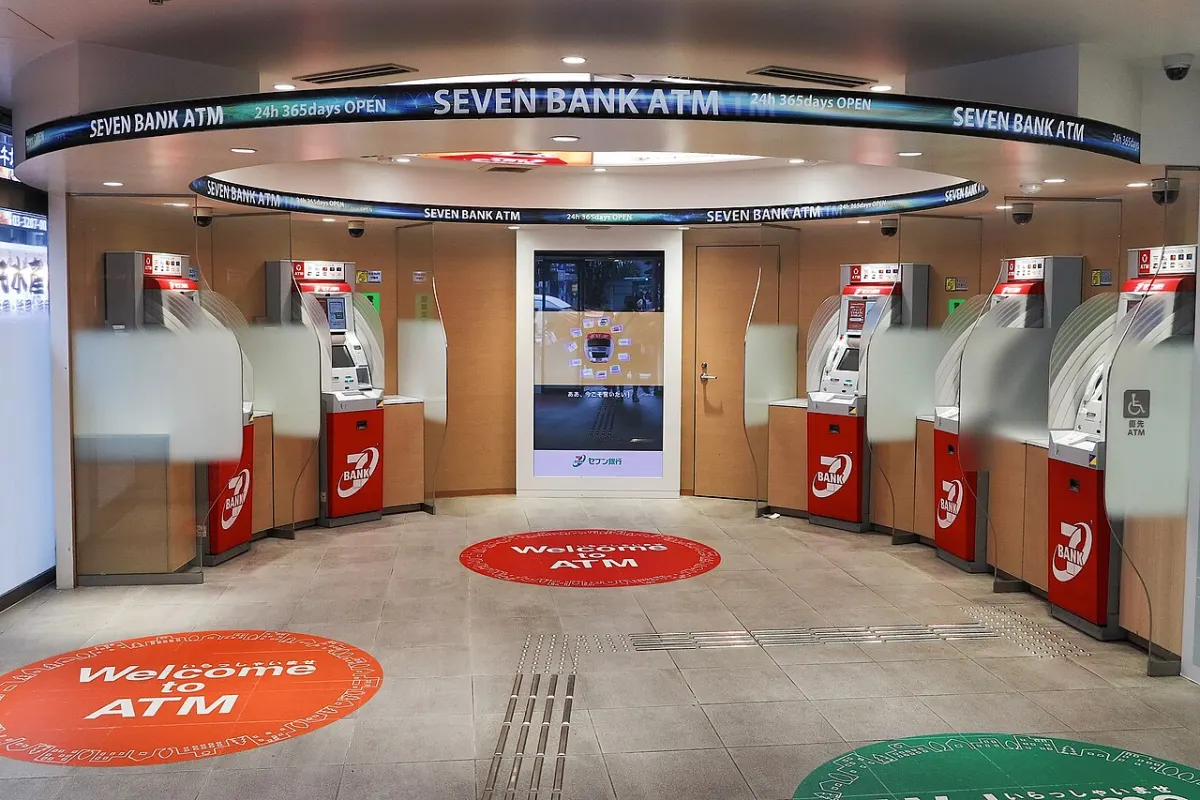
A practical rule: withdraw ¥10,000 at the start of any day that involves a market, a yokocho alley, or an evening in a small bar district. Japan Post Bank and 7-Eleven ATMs are the most reliably international-card-friendly, and there is a 7-Eleven inside or immediately outside almost every major train station.
When NOT to rely on cash alone — and a few other practicalities
Carrying large amounts of cash is safer in Tokyo than almost anywhere else in the world, but there are still situations where you want a card: booking tour tickets online (including our tours), paying for hotels, and large purchases like electronics or clothing. Some newer restaurants in areas like Omotesando or Shimokitazawa have gone card-only in the other direction, so it cuts both ways.
IC cards (Suica, Pasmo) are worth loading with ¥2,000–¥3,000 at the start of your trip for seamless train and bus travel, and many convenience stores also accept them for small purchases. You can top them up at any station machine with cash or, now, with a foreign credit card at most machines. Keep a mix: ¥5,000–¥10,000 in cash for the day's experiences, your card for hotels and larger spends, and a topped-up Suica for getting around. That combination covers every realistic scenario.
Frequently asked questions
Where are the best ATMs in Tokyo for foreign cards?
7-Eleven ATMs and Japan Post Bank ATMs are the most reliable for international Visa, Mastercard, and Maestro cards. There is a 7-Eleven branch at or near most major stations, including inside Shinjuku Station. Convenience store ATMs are open around the clock, which matters when you realise at 10 PM that Golden Gai is cash-only.
Do Tsukiji Market stalls take credit cards?
Very few do. The tour details for our Tsukiji food walk specifically note that you should bring around ¥7,000 per person in cash, in coins and small bills if possible. Individual tastings run ¥300–¥1,500. Arriving without cash means skipping the best stalls.
Can I use Apple Pay or Google Pay in Tokyo?
Yes, at any terminal that accepts contactless Visa or Mastercard — which includes most chain stores, supermarkets, and larger restaurants. It will not help you at Tsukiji stalls or Golden Gai bars, which have no card readers at all. Load a Suica card into Apple Pay or Google Pay for seamless transit and convenience store purchases.
Is it safe to carry cash in Tokyo?
Tokyo is consistently ranked among the world's safest cities for petty crime. Wallets are regularly handed in to police boxes (koban) intact. Carrying ¥10,000–¥20,000 in cash for a day out is normal for locals and poses very little practical risk.
More local guides
- Is Kabukicho Safe at Night? (And Is It Dangerous?) — A Local's Honest Answer →
- Is Golden Gai a Tourist Trap? No — Here's the Real Guide for First-Timers →
- Is Tsukiji Still Worth Visiting? What Actually Moved to Toyosu →
- Omoide Yokocho vs Golden Gai: Which Should You Visit First? (Tokyo Local Guide) →
- Tokyo Izakaya Etiquette: The Rules First-Timers Actually Need →
- Are Tokyo Food Tours Worth It? An Honest Answer from Guides →
- Visiting Meiji Shrine: Etiquette, Best Time & What to Expect | Tokyo Local Guide →
- What Is an Izakaya? How It Differs from a Bar or Restaurant →
- Is Tokyo Nightlife Fun as a Solo Traveler? (Yes — Here's Why It Works) →
- What Is Nomihodai? All-You-Can-Drink in Tokyo Explained (+ Izakaya Tips) →
- What to Eat at Tsukiji Outer Market: A Must-Try List →
- Shimokitazawa, Koenji & Nakano: Where Young Tokyo Actually Hangs Out →
- What Can You Do on a Private Tokyo Tour? Real Examples & How It Works →
- Do You Tip in Tokyo? Restaurants, Taxis, Guides & Hotels Explained →
- How to Find Local Experiences in Tokyo (Without the Tourist Traps) →
- One Perfect Night in Shinjuku: What to Do from 5pm to Midnight →
- Shinjuku Izakaya Tour vs. Going On Your Own: Which Is Better for a First Night? →
- Shrine vs Temple in Japan: What's Actually the Difference? →